
Wednesday, October 21, 2026

U.S. Rep. Donald S. Beyer Jr. (D-8)
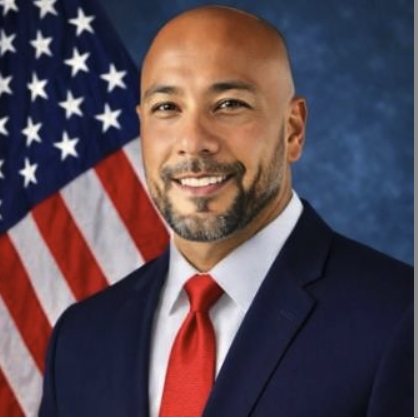
Tony A. Sabio (R)

Shelly M. Arnoldi (L)
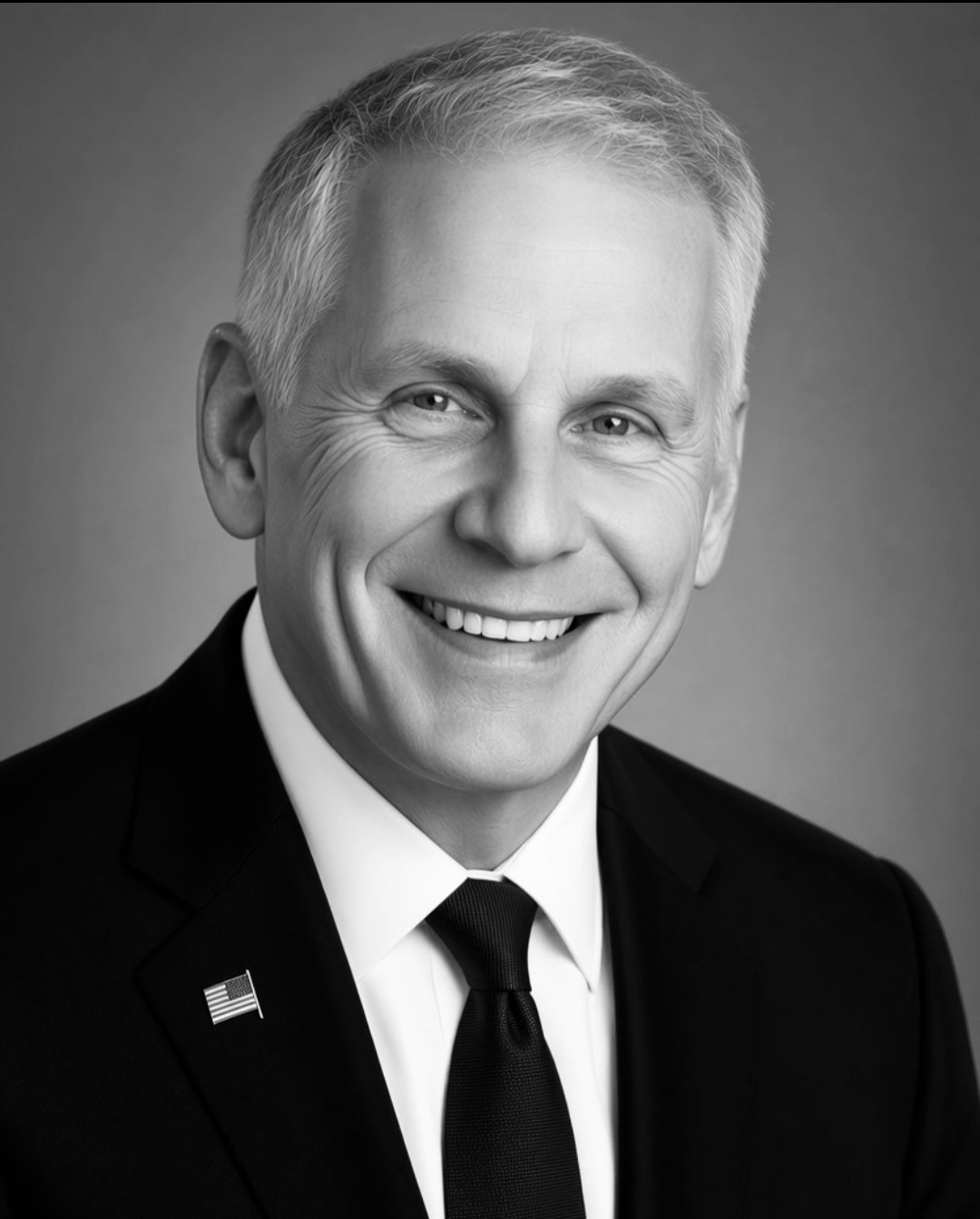
Tim S. Sharman (I)
Member, U.S. House — District 8
The Connection Newspapers invited candidates on the ballot for Virginia’s 8th Congressional District race — Democratic incumbent Donald S. Beyer Jr., Republican challenger Tony A. Sabio, Libertarian challenger Shelly M. Arnoldi, and Independent challenger Tim S. Sharman — to participate in our 2026 Voter Guide. We created a questionnaire and asked candidates about issues facing our region, including housing affordability, transit infrastructure, federal job protections, and regional utility regulation. We capped responses at 500 words total and truncated anything beyond that limit. Candidates appear in the official ballot order set by state election officials.
OUR QUESTIONNAIRE
Q1 Housing & Zoning: Under Department of Housing and Urban Development guidelines, housing is considered affordable when costs do not exceed 30 percent of income for families earning up to 80 percent of Area Median Income—including extremely low-income households earning at or below 30 percent of Area Median Income. Given that Virginia’s Dillon Rule restricts Fairfax County’s authority over local revenue and zoning mandates, how will you leverage federal housing grants, housing choice vouchers, federal tax credits, or federal land transfers to expand affordable housing in our district?
Q2 Transit & Infrastructure: Fairfax County relies heavily on federal partnerships to fund critical transportation networks. What specific federal infrastructure funding bills, transit grants for Metro, or United States Department of Transportation initiatives like Safe Streets and Roads for All will you champion to relieve traffic congestion and protect vulnerable road users?
Q3 Federal Workforce & Economy: Fairfax County’s economy relies heavily on tens of thousands of federal civil servants and contractors, whose spending sustains local small businesses and the regional job market. How will you protect federal workforce jobs and government contracting, and what strategies will you pursue to support Northern Virginia workers and industries impacted by economic shifts?
Q4 Energy Grid & Utility Rates: Following Governor Spanberger’s intervention before the State Corporation Commission regarding the proposed Dominion Energy–NextEra merger, and federal concerns over data center energy load and rising utility bills: What federal legislation or regulatory oversight will you pursue to protect Northern Virginia households from rising energy costs while supporting grid reliability?
CANDIDATE RESPONSES

Donald S. Beyer, Jr. (Democrat — Incumbent)
Q1 Housing & Zoning: I am a vocal fighter in the House for policies to make housing more affordable. On the House Ways and Means Committee I lead on housing with the Affordable Housing Credit Improvement Act, portions of which were enacted last year. I secured federal funding for local affordable housing projects in Northern Virginia. This year, I helped enact the 21st Century ROAD To Housing Act to improve federal housing programs and expand financing options to spur home construction and make housing more affordable.
Q2 Transit & Infrastructure: My strong track record strengthening our transportation infrastructure and ensuring transit in the DMV is safe and reliable includes helping pass legislation to fund WMATA and create new safety oversight for the Metro system, and passing the Infrastructure Investment and Jobs Act to fund transit and other surface transportation. I helped secure funds to renovate Arlington Memorial Bridge, passed legislation to enable the Long Bridge Project to expand rail traffic over the Potomac River, and brought federal dollars home for investments in our bus systems. I’ve also worked hard to secure safety improvements on local roadways like GW Parkway.
Q3 Federal Workforce & Economy: The Trump Administration’s assault on the federal workforce has been devastating. Thousands of civil servants who deserved thanks for their tireless work for the American people were fired illegally, and the essential services they provide were gutted on the whim of corrupt figures like Elon Musk. I’ve done all I can to stand up for our feds, through direct challenges to the Administration, through legislation, and by holding jobs fairs and resource fairs for federal workers. It’s hard to describe all I have done in response to this local crisis in the space allotted; I wrote about those efforts at greater length here.
Q4 Energy Grid & Utility Rates: I support policies and have introduced legislation to protect ratepayers from higher electricity costs. I have also long worked to address challenges that hamper the delivery of affordable, reliable energy to the grid. I share Virginians’ concerns about the proposed Dominion-NextEra merger, and have long shared the view that consolidation can be harmful to consumers. The merger should only go forward if it is in the best interests of ratepayers and workers, and I am deeply skeptical that this will ultimately be the case.
_________
Tony A. Sabio (Republican — Challenger)
Q1 Housing & Zoning: My goal is to make homeownership attainable while respecting local zoning authority. I would establish a Builder Tax Credit to encourage starter-home and a Workforce Homeownership Tax Credit for police officers, firefighters, teachers, nurses, EMTs, and medical personnel. I would cut unnecessary federal red tape that delays construction and raises costs while supporting responsible use of Housing Choice Vouchers, HOME funding, and housing tax credits. I would also examine appropriate underused federal land for housing. We need more supply, lower costs, and pathways to homeownership.
Q2 Transit & Infrastructure: Northern Virginia needs both reliable transit and roads that move. I would support long-term federal infrastructure funding for Metro reliability and safety, roads, bridges, congestion relief, and faster project delivery. I support programs such as Safe Streets and Roads for All when they help Fairfax address dangerous intersections and protect vulnerable road users. Transportation policy must also recognize that many Northern Virginia families depend on automobiles. We should improve Metro and bus connectivity while investing in roadway capacity and infrastructure that reduces congestion rather than forcing residents into one transportation option.
Q3 Federal Workforce & Economy: Northern Virginia’s federal employees and contractors are important to our economy. Government should be efficient and accountable, but indiscriminate cuts are not reform. I would protect mission-critical positions and strengthen opportunities for small and veteran-owned federal contractors. But Northern Virginia must also become less economically dependent on the federal government. I want to build a new jobs ecosystem by attracting and growing industries in advanced nuclear energy, technology, cybersecurity, advanced manufacturing, and skilled trades, supported by apprenticeships and workforce development. We can protect essential jobs today while creating high-paying private-sector careers for tomorrow and building a stronger, more diversified Northern Virginia economy.
Q4 Energy Grid & Utility Rates: Congress does not set Virginia’s retail electricity rates, but federal policy significantly affects energy supply, transmission, reliability, and ultimately costs. My Promise for America prioritizes reliable American energy and grid modernization. I would advance the Nuclear Ready Grid Zone Act, support advanced nuclear and small modular reactors, strengthen domestic transformer production, and accelerate responsible permitting. With data centers creating enormous new electricity demand, I would pursue greater transparency over infrastructure cost allocation so residential customers are not disproportionately burdened. Our objective should be more power, greater reliability, and lower long-term costs.
_________________

Shelly M. Arnoldi (Libertarian — Challenger)
Q1 Housing & Zoning: Federal housing programs like vouchers, tax credits, and land deals grow the bureaucracy without doing much to make housing cheaper. They add rules and then subsidize the cost of the rules. I'd cut the federal mandates and paperwork that make it slow and expensive to build here, and let localities make their own zoning decisions instead of tying them to federal strings. When the federal government is involved, it should put citizens and legal residents first. We get more housing by clearing government out of the way, not by adding another program on top of the last one.
Q2 Transit & Infrastructure: Northern Virginia needs roads and transit that actually work, but I won't vote for another giant spending bill full of earmarks and wishful thinking. I've spent 27 years managing federal construction projects, so I know the difference between money that fixes a bottleneck and money that vanishes into overhead. I'd put existing infrastructure dollars toward maintenance and congestion relief, with real accountability for what gets delivered, and I'd oppose the bloated programs that leave taxpayers paying more for less.
Q3 Federal Workforce & Economy: This region runs on federal workers and contractors, and I'll protect those jobs. I spent years working inside the federal system as an engineer, so I've seen the waste and the bureaucracy firsthand. I have zero tolerance for financial misconduct with taxpayers' money. I'd push for transparent budgets, cut the unnecessary administrative layers, and hold the government accountable for every dollar it spends. I'd also lower taxes and red tape so small businesses can grow here, so the 8th District isn't one budget fight away from crisis.
Q4 Energy Grid & Utility Rates: Two things are driving up what families pay: taxpayer subsidies for unreliable wind and solar projects, and data centers pulling huge new loads onto the grid. I'd end those subsidies. Energy that can't stand on its own shouldn't be propped up on the backs of ratepayers. And I'd hold data centers responsible for their own energy and water, not at the expense of working families. Big power users should fund and secure their own supply, not push the cost or the reliability risk onto households. As an environmental engineer, my priority is simple: power that's reliable and affordable.
____________________________
Tim S. Sharman (Independent — Challenger)
Q1 Housing & Zoning: would encourage the General Assembly to give Northern Virginia localities substantially greater autonomy over housing and land-use. At the federal level, I would complement that with infrastructure grants that help communities build more housing where transportation and other infrastructure can support it.
Q2 Transit & Infrastructure: We need federal grants that increase transportation capacity and get more cars off our congested roads. I live close to the Wilson Bridge, and it’s a factory of misery most afternoons. We should invest more in mass transit, including exploring commuter ferries on the Potomac. We also need to make our roads safer. In urban areas that means addressing dangerous parking, double parking, scooters and other conflicts between road users. On our highways, reckless driving remains a serious problem. Federal transportation and safety grants should help local communities tackle these problems.
Q3 Federal Workforce & Economy: Northern Virginia cannot afford another federal government shutdown. The 2025 shutdown caused immense harm to federal workers, their families, contractors and local businesses. Imagine having your paycheck simply not show up twice. I believe there’s a real risk of further shutdowns in 2027–28. We should pass legislation as soon as possible guaranteeing federal workers are paid on time during any future shutdown. I would also protect Northern Virginia’s federal workforce and contracting base from arbitrary cuts while supporting reforms that make government work more effectively for Americans. Federal workers and this region should never become pawns of political dysfunction.
Q4 Energy Grid & Utility Rates: Local communities should decide whether and where data centers are built. Families and small businesses should not pay higher electricity and water costs because enormous new data centers arrive in their communities – the SCC’s GS-5 rate class addresses that. And we also need to rapidly build the energy America will need. We need more generation, more transmission and a more resilient grid. I support building all forms of power generation where they make economic and environmental sense. The answer to rapidly growing electricity demand cannot simply be higher bills for existing customers. At the Federal level we must abolish the Justice Department's AI Litigation Task Force, which was created to challenge state AI laws. The data center issue is so politically hot right now because people are rightly scared for their jobs. We need to prepare for the transformation of work. That's why America needs an AI & Robotics Transition Program.